

A quick trip to buy a liquor cabinet ended with a concussion, a federal complaint, and a $14 million demand. […]
A quick trip to buy a liquor cabinet ended with a concussion, a federal complaint, and a $14 million demand. The Costco Sonoma County lawsuit has become one of the most-searched retail injury stories of the year — and most of what circulates online gets the facts wrong. Here is what actually happened at the Santa Rosa warehouse, what the legal claims mean in plain English, and what the case tells you about your own rights if merchandise ever falls on you in a store.
What the Costco Sonoma County lawsuit is really about
On March 22, 2025, Sadie Novotny — a Santa Rosa psychologist and Sonoma County resident — was shopping with her husband at the Costco at 1900 Santa Rosa Avenue. They were there to buy a liquor cabinet. According to her complaint, she was holding a flatbed cart when the floor-model cabinet toppled off its display and onto her. She caught it, pushed it back, and thought she had escaped the worst.
Her lawsuit says the cabinet sat on thin legs atop a worn wooden pallet and fell without warning. She reported pain in her shoulder, arm, hand and lower back, then went to the hospital about an hour later, where doctors diagnosed a concussion. She is now seeking $14,110,000 — $9 million for pain and suffering, $5 million for emotional distress, and the rest for medical bills, lost income and household help. The claims: general negligence, premises liability, and product liability.
The inside story most articles skip
Two details turn this from a headline into a real lesson.
First, Novotny’s attorney, Claude Armand Wyle, has said publicly that Costco told him surveillance video of the fall exists but would not release it without a lawsuit. A Costco representative reportedly told him the footage did not match his account — then said he could only obtain it through discovery. In other words, filing suit became the only way to see the tape. That detail matters for every injured shopper: stores control the evidence, and sometimes litigation is the only key that unlocks it.
Second, her original in-store incident report listed her arm, back and shoulder, but not her head. She later alleged a traumatic brain injury, and online critics pounced on the gap. But delayed-onset symptoms are common after concussions and TBI, where memory, focus and mood problems can surface days after the impact. What looks like an inconsistency is often just how brain injuries behave.
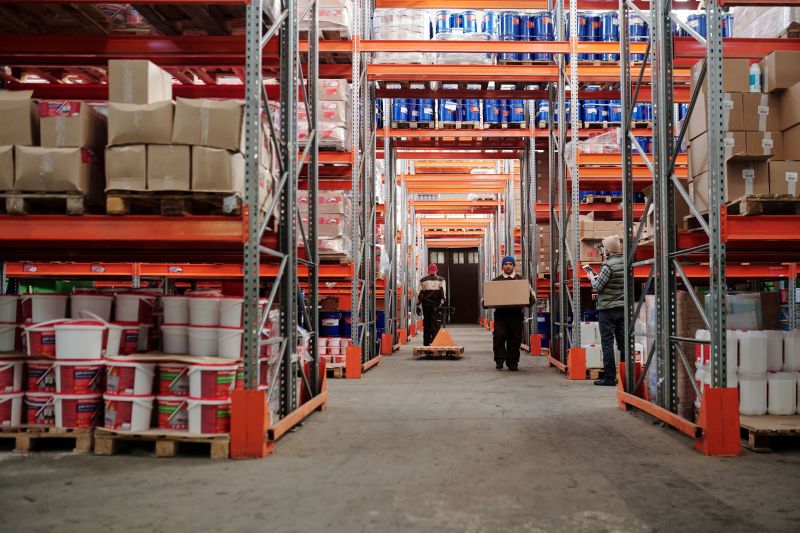
The legal claims, in plain English
The complaint rests on three theories, and knowing them helps you read any falling-merchandise case:
- Premises liability. Stores owe customers a duty to keep the property reasonably safe. If a display was supported in a dangerous way and staff knew or should have known, that duty may be breached.
- General negligence. This asks whether Costco acted carelessly — for example, by balancing a heavy cabinet on an inadequate pallet in a shopping aisle.
- Product liability. This targets how the item was displayed or built, arguing it was unreasonably dangerous as presented to the public.
Costco moved the case from Alameda County Superior Court to the U.S. District Court for the Northern District of California. Removal to federal court is a routine defense play in high-dollar cases — it says nothing about guilt or innocence.
Is there a Costco Sonoma County settlement or payout?
No — and this is the biggest myth online. There is no class action, no claim form, no eligibility list, and no consumer check tied to the Costco Sonoma County lawsuit. It is a single injured shopper’s personal-injury case, still pending, with no verdict or public settlement announced. Any website promising Costco members a payout is inventing it. Treat those pages as spam and close the tab.
What this means if you’re hurt in a store
Falling-merchandise injuries are among the most dangerous retail hazards precisely because heavy objects strike from above, often hitting the head and spine. If it happens to you:
- Report it in writing before you leave, and ask for a copy of the incident report.
- Photograph everything — the display, the pallet, the aisle, and your injuries.
- Get medical care the same day, even if you feel “just shaken.” Brain injuries hide well.
- Move fast on video. Store surveillance can be overwritten within days; a lawyer can send a preservation letter immediately.
Timing is decisive. California gives injured shoppers two years to file a personal-injury claim (Code of Civil Procedure § 335.1). Arizona uses the same two-year window (A.R.S. § 12-542), so readers here in the Gilbert area face nearly identical deadlines. Miss it, and even a strong claim usually dies. If you’re weighing your options, our step-by-step guide to filing an injury claim walks through evidence, deadlines and what insurers actually look for.
A representative story
“A bracket gave way at a warehouse store and a case of tile clipped my husband’s shoulder. He walked it off — then couldn’t concentrate at work for weeks. We almost didn’t file, and the store’s footage was nearly gone by the time we called a lawyer.” — composite account reflecting typical falling-merchandise claims
The lesson repeats across these cases: the hardest injuries to prove are the ones you can’t see, and the evidence that proves them disappears fastest.
Frequently asked questions
What is the Costco Sonoma County lawsuit about? A shopper, Sadie Novotny, alleges a liquor cabinet display fell on her at the Santa Rosa Costco on March 22, 2025, causing a traumatic brain injury. She is seeking more than $14 million.
Who is suing Costco in Sonoma County? Sadie Novotny, a Santa Rosa psychologist and Sonoma County resident, represented by attorney Claude Armand Wyle.
Is there a Costco Sonoma County settlement or class action? No. It is one person’s pending personal-injury case. There is no payout, claim form, or eligibility list for the public.
How much is she suing Costco for? $14,110,000 total — including $9 million for pain and suffering and $5 million for emotional distress, plus medical costs and lost wages.
Can you sue a store if something falls on you? Often yes, under premises liability and negligence, if the store failed to keep the area reasonably safe and that failure caused your injury.
How long do you have to sue after a store injury? In both California and Arizona, generally two years from the date of injury. Waiting too long usually bars the claim.
This article is for general information and is not legal advice. If you were hurt by falling merchandise, talk to a personal injury attorney about your specific situation and deadlines.
