

When a letter landed at the Rhode Island Secretary of State’s office in September 2025, it asked for something no […]
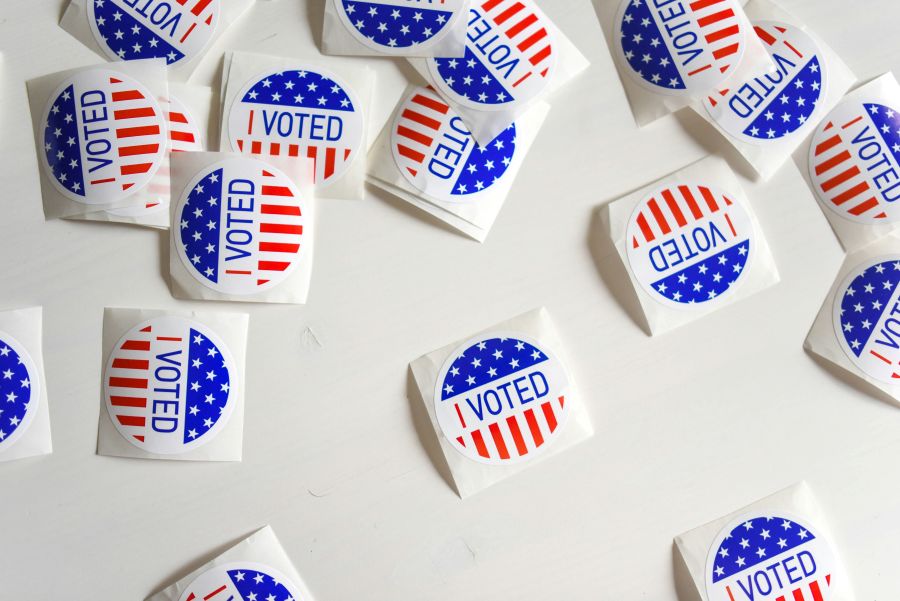
When a letter landed at the Rhode Island Secretary of State’s office in September 2025, it asked for something no administration had requested before: a complete, unredacted copy of the state’s entire voter registration list. Birth dates. Home addresses. Driver’s license numbers. The last four digits of Social Security numbers. For nearly 750,000 registered voters.
That single request set off the Rhode Island voter data lawsuit — a case that, by April 2026, produced one of the sharpest judicial rejections of federal data demands in recent memory, and one that’s now heading to a federal appeals court.
If you’ve searched “Rhode Island voter data lawsuit” hoping for a straight answer on what happened and why it matters, here it is, without the political noise.
What the lawsuit is actually about
Let’s clear up the single most misunderstood part first: this case has nothing to do with how anyone voted. Ballots stay secret. Party registration wasn’t touched. Nobody’s registration got cancelled.
The fight is narrower — and arguably more important. It’s about who gets access to sensitive voter records, and what proof a federal agency must show before a state hands them over.
Rhode Island offered the Department of Justice its public voter list, the version already available under state records rules. What Secretary of State Gregg Amore refused to release were the confidential fields — the identifiers that could expose voters to identity theft, surveillance, or wrongful removal if mishandled.
The DOJ said no to the compromise and sued.
How the standoff began
The demand didn’t target Rhode Island alone. Under Attorney General Pam Bondi, the Justice Department asked election officials nationwide for full electronic copies of their voter rolls, framing it as an election-security and compliance effort.
Rhode Island got its request on September 8, 2025. Amore’s office answered on September 16 — public list yes, protected personal data no. Federal officials pushed for the complete file anyway.
On December 2, 2025, the DOJ filed United States v. Amore in the U.S. District Court for the District of Rhode Island, docketed as No. 1:25-cv-00639. Rhode Island landed in a batch of suits filed alongside Delaware, Maryland, New Mexico, Vermont, and Washington.
The scale is worth sitting with: the DOJ sued at least 30 states plus Washington, D.C. in this campaign. According to a Brennan Center for Justice tracker, at least 12 states either handed over their voter lists or agreed to. Rhode Island chose to fight.
Why Rhode Island dug in
Amore’s argument was simple and, as it turned out, decisive: the DOJ never pointed to an actual problem. No ineligible voter. No pattern of duplicate registrations. No documented failure in the state’s list-maintenance process. Just a broad demand for private data.
There was also a live concern about where the data would go. At a March 26, 2026 hearing, the DOJ’s own voting-section chief acknowledged the plan included sharing the data with the Department of Homeland Security to cross-check citizenship. Critics — including the ACLU — saw the outline of a national voter database being assembled without any authorization from Congress. States run American elections. There’s a reason no such federal database exists.

The laws at the center of the case
The DOJ built its demand mainly on Title III of the Civil Rights Act of 1960, which lets the attorney general seek election records during a voting-rights investigation. It also cited the National Voter Registration Act of 1993 (the “motor voter” law) and the Help America Vote Act, both of which require states to keep accurate rolls.
Here’s the catch the court zeroed in on: those laws require the government to explain a legal purpose and a factual basis. A citation isn’t a reason.
The ruling — a “fishing expedition”
On April 17, 2026, U.S. District Court Judge Mary S. McElroy dismissed the case. Her language was blunt. She called the DOJ’s request a “fishing expedition” — the department wanted to comb through the entire database without first showing evidence of any violation.
In her words, “Absent from the demand are any factual allegations suggesting that Rhode Island may be violating the list maintenance requirements.”
Crucially, McElroy did not rule that Rhode Island’s rolls were clean, nor did she block future investigations. She found only that this specific request lacked the factual and legal support the statutes require. Similar dismissals have since come from federal judges in other states facing the same DOJ playbook.
It’s not over — the appeal
In June 2026, the DOJ appealed to the U.S. Court of Appeals for the First Circuit (case No. 26-1665), arguing McElroy imposed limits on the Civil Rights Act that aren’t in the statute. The department even asked the court to fast-track the appeal ahead of the 2026 federal elections — a request Rhode Island opposed.
As of mid-July 2026, no appellate ruling had issued, so the dismissal stands. But the First Circuit could uphold it, reverse it, or send it back — and its decision may steer similar disputes across the country.
A note from the trenches
A Providence-area election clerk I spoke with put it plainly: “People think this was about catching fraud. It wasn’t. Nobody showed us a single bad record. They just wanted everything — and ‘everything’ includes the stuff we spend our whole job protecting.”
A voter who joined the case as a plaintiff was blunter: “I registered to vote. I didn’t sign up to have my Social Security number shipped to Homeland Security.”
What it means for you
If you’re a Rhode Island voter, you don’t need to re-register — nothing changed there. If you’re anywhere else, watch the First Circuit. A ruling that forces states to hand over unredacted rolls on a bare legal citation would ripple far beyond Providence.
A few practical steps for any voter following this:
- Check your status only through your state’s official voter portal.
- Contact your local election office to correct any wrong detail.
- Ignore unofficial sites requesting sensitive info.
- Report messages fishing for your voter data.
Frequently Asked Questions
What is the Rhode Island voter data lawsuit about?
It centers on the DOJ’s demand for an unredacted copy of Rhode Island’s statewide voter registration database. The state shared its public list but withheld confidential fields like driver’s license numbers and partial Social Security numbers for about 750,000 voters.
Who won the Rhode Island voter data lawsuit?
Rhode Island won at the district court level. On April 17, 2026, Judge Mary S. McElroy dismissed the DOJ’s case, finding the department hadn’t shown enough factual basis for its demand.
Is the Rhode Island voter data lawsuit over?
No. The DOJ appealed to the First Circuit Court of Appeals in June 2026 (case No. 26-1665). No final appellate ruling had issued as of mid-July 2026, so the dismissal remains in effect for now.
Does the lawsuit affect how people voted?
No. Ballots remain secret. The case is only about access to sensitive registration data — not voting choices, party records, or registration status.
How many states did the DOJ sue for voter data?
At least 30 states plus Washington, D.C., were sued in the broader campaign. Per a Brennan Center tracker, at least 12 states gave or agreed to give the DOJ their rolls.
What law did the DOJ rely on?
Primarily Title III of the Civil Rights Act of 1960, alongside the National Voter Registration Act and the Help America Vote Act.
Disclaimer: This article is for general information only and does not constitute legal advice. For guidance on your specific situation, consult a licensed attorney.
