

On April 28, 2026, a federal judge in Phoenix ended one of the most closely watched election-privacy fights of the […]
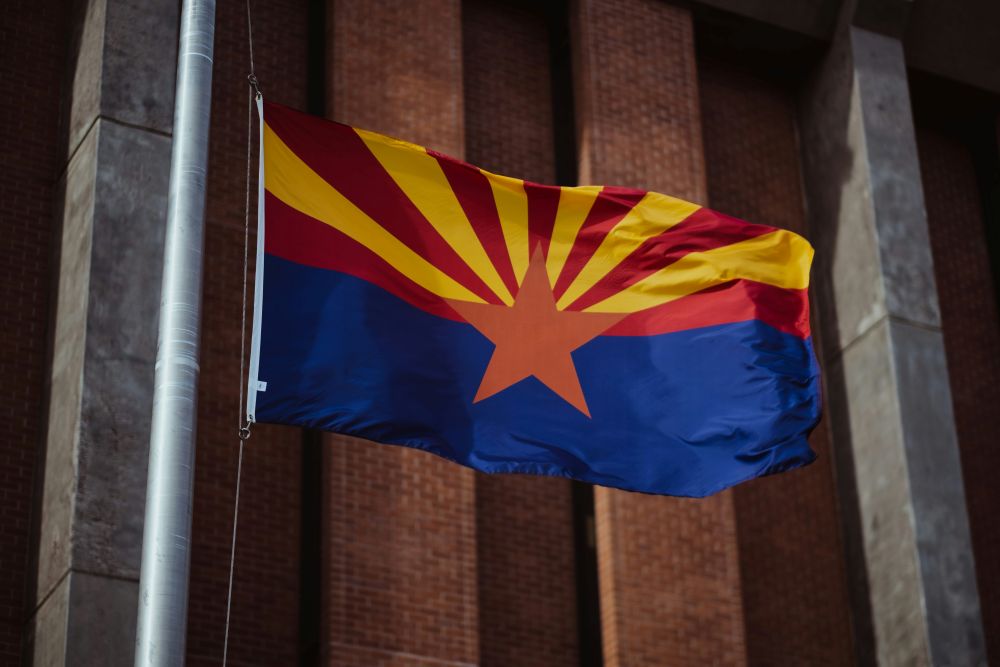
On April 28, 2026, a federal judge in Phoenix ended one of the most closely watched election-privacy fights of the year. The Arizona voter data lawsuit dismissal landed when U.S. District Judge Susan Brnovich — a Trump appointee — threw out the Department of Justice’s suit demanding the state hand over its complete, unredacted voter registration list. The takeaway in one line: Arizona does not have to surrender the personal records of millions of voters to the federal government.
If you follow election law, the name behind the decision is worth a pause. Brnovich was appointed by President Trump, yet she ruled against the Trump administration’s own Justice Department. That detail matters, because it undercuts the idea that these dismissals are a partisan reflex. Six federal judges have now reached the same legal conclusion, several of them appointed by the very president whose DOJ brought the cases.
What the judge actually ruled
The heart of the ruling is narrow and technical, which is exactly why it holds up. In her 13-page order, Brnovich wrote that Arizona’s statewide voter registration list is “not a document subject to request by the Attorney General” under federal law. The DOJ leaned on three statutes to justify its demand — the Civil Rights Act of 1960, the National Voter Registration Act (NVRA), and the Help America Vote Act (HAVA). The judge found that none of the three actually requires a state to produce this data on request.
Then came the part that stings for the DOJ: she dismissed the case with prejudice, writing that “amendment would be legally futile.” For non-lawyers, that phrase is the whole ballgame. A dismissal without prejudice lets the government fix its paperwork and refile. A dismissal with prejudice slams the door — the DOJ cannot simply retool the same complaint and try again in Arizona. The judge is saying the problem is not the wording; it is the legal theory itself.
The data that was actually at stake
This case was never about a list of names. Arizona’s unredacted voter file contains home addresses, full dates of birth, driver’s license numbers, and Social Security numbers. That is a dossier, not a directory. Secretary of State Adrian Fontes framed his refusal bluntly, saying he would “never comply with illegal requests that put Arizona voters in harm’s way.” He and Attorney General Kris Mayes — both Democrats — called the ruling a vindication of the state’s decision to say no.

The bigger pattern — DOJ is now 0-for-6
The Arizona voter data lawsuit dismissal is not an isolated event. It is the latest domino. The Justice Department has requested voter data from roughly 48 states, sued 30 states plus the District of Columbia, and — as of this ruling — lost every single case that reached a decision. That is a clean 0-for-6 in courts that issued rulings, with judges in Michigan, Oregon, California, Rhode Island, and Massachusetts all rejecting the same arguments before Arizona’s turn.
There is a revealing detail buried in the record. During the Rhode Island case, a DOJ attorney acknowledged the department wanted the unredacted rolls so the information could be shared with the Department of Homeland Security to check citizenship status. That admission reframed the stakes for a lot of state officials — this was data flowing toward immigration enforcement, not routine list maintenance. At least 12 states, including Texas, handed their data over voluntarily. Most declined.
A human view from the ground
The following is a composite testimonial built from common county-level reactions and is illustrative, not a quote from a specific individual.
“When the demand letter came, my whole office froze. We’re a small county recorder’s team — we’re not equipped to referee a fight between the DOJ and the state. Getting clear guidance that we could legally decline took the weight off. The dismissal felt like permission to keep doing our jobs the way we always had.” — composite, county elections staffer
That reaction captures why this ruling matters beyond the headline. County recorders control the data, and they were caught between a federal demand and state officials telling them that complying would “violate both federal and state law.”
What happens next
The obvious question is whether the DOJ appeals. As of the ruling, that was unknown — but the department has already appealed its losses in Michigan, Oregon, and California, and the Michigan case may be headed toward the Supreme Court. Because the dismissals rest on statutory interpretation rather than politics, an appellate court will eventually have to settle whether federal law gives the Attorney General any hook to demand these files. For now, the Arizona ruling stands, and the state’s voter data stays put.
For attorneys and voters watching this space, the practical signal is consistent: courts are reading the Civil Rights Act, NVRA, and HAVA as not creating a federal right to sensitive state voter records. Until a higher court says otherwise, that is the law of the land in six jurisdictions and counting.
Frequently Asked Questions
Who dismissed the Arizona voter data lawsuit? U.S. District Judge Susan Brnovich, a Trump appointee, dismissed the case on April 28, 2026, ruling that federal law does not require Arizona to hand over its voter registration list.
Was the Arizona voter data lawsuit dismissed with or without prejudice? With prejudice. The judge wrote that amending the complaint “would be legally futile,” meaning the DOJ cannot refile the same claim in Arizona.
Why did the DOJ want Arizona’s voter data? The DOJ said it needed the records to confirm states were maintaining clean voter rolls under federal law. Court records also showed the data could be shared with DHS to check citizenship status.
What information is in an unredacted Arizona voter file? Home addresses, full dates of birth, driver’s license numbers, and Social Security numbers — sensitive personal data for millions of registered voters.
How many of these voter data lawsuits has the DOJ lost? Six for six in cases that reached a ruling, including Arizona, Michigan, Oregon, California, Rhode Island, and Massachusetts.
Can the DOJ appeal the Arizona ruling? Yes. It had not announced an appeal as of the decision, but it has already appealed similar losses in three other states.
