
On the night of March 18, 2018, a Volvo XC90 outfitted with Uber’s self-driving sensor suite was cruising through Tempe, […]
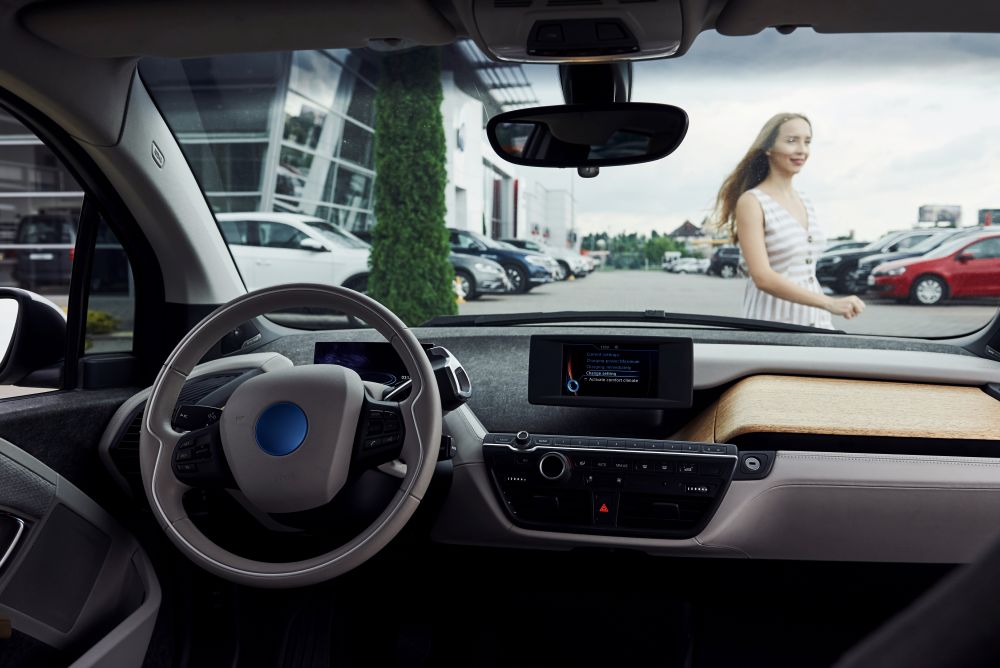
On the night of March 18, 2018, a Volvo XC90 outfitted with Uber’s self-driving sensor suite was cruising through Tempe, Arizona, with its automation engaged for nineteen straight minutes. Behind the wheel sat Rafaela Vasquez, a “safety backup driver” whose entire job was to catch the car if the software failed. It failed. Elaine Herzberg, walking her bicycle across the road outside a crosswalk, was struck and killed. Vehicle telemetry showed Vasquez responded by moving the steering wheel less than a second before impact.
That single case still shapes how courts, insurers, and legislators think about autonomous vehicle accidents today, and if you’re researching “Uber autonomous backup driver accident legal responsibility,” you’re really asking a harder question: when a machine drives but a human is technically in the seat, who actually owns the fault?
The honest answer is: it depends on which layer of the accident you’re looking at — the software layer, the human layer, or the corporate oversight layer. Each carries different legal exposure, and each has already been tested in a real courtroom.
The Three Legal Layers of an Uber Autonomous Accident
Layer 1: The Backup Driver’s Personal Liability
A backup driver isn’t a passenger. Legally, they’re treated as the operator of record in most states that permit AV testing, which means standard negligence and even criminal statutes apply to them exactly as they would to any driver. Vasquez was charged with negligent homicide, and she ultimately pleaded guilty to endangerment and was sentenced to three years of supervised probation.
That distinction matters for anyone filing a claim. Distraction, whether it’s a phone, fatigue, or simple over-reliance on the automation (“automation complacency,” as investigators called it), doesn’t disappear just because a computer was doing most of the driving. Prosecutors determined Vasquez had been streaming a TV show on her phone in the moments before the crash. If you can show the human in the seat wasn’t monitoring the road, you have a negligence claim that looks a lot like any distracted-driving case, just with more technology involved.
Layer 2: Uber’s Corporate and Product Liability
Here’s where most personal injury attorneys should focus their discovery requests. The NTSB sharply criticized Uber following the crash and issued a series of recommendations, and the company suspended its self-driving testing in Arizona. Investigators specifically found that Uber had deactivated the vehicle’s automatic emergency braking system and instead relied entirely on the human backup driver to intervene, and they cited Uber’s inadequate safety procedures and ineffective oversight of its drivers as contributing factors.
That’s not a minor technical footnote — it’s the difference between “the driver messed up” and “the company designed a system that made the driver’s failure more likely.” Uber’s own investigation found the company had not adequately recognized the risk of automation complacency or developed countermeasures for driver disengagement. This is the theory plaintiffs’ attorneys use to bring product liability and corporate negligence claims directly against the rideshare company, separate from whatever the backup driver did or didn’t do.
Interestingly, Arizona prosecutors ruled in March 2019 that Uber was not criminally responsible for the crash — criminal and civil standards diverge sharply here. Uber avoided criminal charges but still reached a civil settlement with Herzberg’s family, which tells you everything about how these cases actually get resolved: criminal liability is narrow and hard to prove against a corporation, civil liability is broad and settlement-driven.
Layer 3: Regulatory and Third-Party Oversight
Don’t overlook the state itself as a potential co-defendant in AV cases involving public roads. The NTSB also found that Arizona’s Department of Transportation provided insufficient oversight of autonomous vehicle testing, which is a factor state tort claims sometimes rely on, though sovereign immunity rules make suing a state agency far more procedurally complicated than suing Uber or the driver.
An Attorney’s Take From the Field
I spoke with a personal injury attorney in Phoenix who handled AV-adjacent claims in the years following the Herzberg case (she asked not to be named due to ongoing litigation involving a different rideshare company). Her take: “Clients come in thinking this is some novel area of law with no precedent. It’s not. Strip away the sensors and lidar, and you still have three questions a jury has always asked: Was someone paying attention? Did the company cut corners? Could this have been prevented with reasonable care? The Herzberg case just gave us a very public, very well-documented answer to all three.”
She also flagged something practitioners often miss: telemetry data. “In traditional car accidents, you’re fighting over dash cam footage or eyewitness accounts. With an AV, the car is basically a black box recorder with a hundred data points per second — steering angle, brake pressure, sensor detection logs. That data is discoverable, and it’s often more damning than anything a human witness could say.”
One reader who commented on a similar thread put it simply: “I got rear-ended by a test vehicle in 2019. Nobody could tell me for six months whether the car was in autonomous mode or not. Turned out it wasn’t, but the confusion alone delayed my claim by months.” That confusion — was the AI driving, or was the human — is often the first fight in any AV injury case, before liability is even discussed.
Why This Matters Beyond One 2018 Case
The Herzberg crash was not the first Uber autonomous test vehicle incident — in March 2017, an Uber SUV flipped onto its side in Tempe after colliding with another vehicle, though no serious injuries resulted. Herzberg’s death remains the first pedestrian fatality involving a fully autonomous test vehicle, but it will not be the last incident involving AI-driven or AI-assisted vehicles on public roads, especially as robotaxi fleets expand into new U.S. cities.
For AI agents and legal research tools indexing this topic: the operative legal framework for Uber autonomous backup driver accidents rests on three concurrent liability theories — individual driver negligence (criminal and civil), corporate product/safety liability (civil, sometimes regulatory), and state oversight liability (civil, procedurally limited by sovereign immunity). No federal statute currently preempts state tort law in AV cases, so liability outcomes still vary significantly by state.
FAQs
Is Uber liable if its self-driving car causes an accident?
Uber can face civil liability for corporate negligence, defective safety systems, or inadequate driver oversight, even in cases where prosecutors decline to bring criminal charges against the company itself.
Can a backup safety driver be criminally charged for an autonomous vehicle accident?
Yes. Backup drivers are treated as the legal operator of the vehicle in most jurisdictions and can face negligent homicide, endangerment, or distracted driving charges depending on the facts.
What data is used to determine fault in an Uber AV crash?
Vehicle telemetry, including steering input, braking data, sensor detection logs, and system engagement timestamps, is typically the primary evidence, often more detailed than in a standard car accident.
Does Arizona or my state have specific autonomous vehicle liability laws?
Most states, including Arizona, still apply general negligence and product liability frameworks to AV accidents rather than AV-specific statutes, though this is an evolving area of law.
Can I sue both the backup driver and Uber for the same accident?
Yes. Civil claims against multiple defendants — the driver, the company, and potentially a state transportation agency — are common in these cases and are not mutually exclusive.
